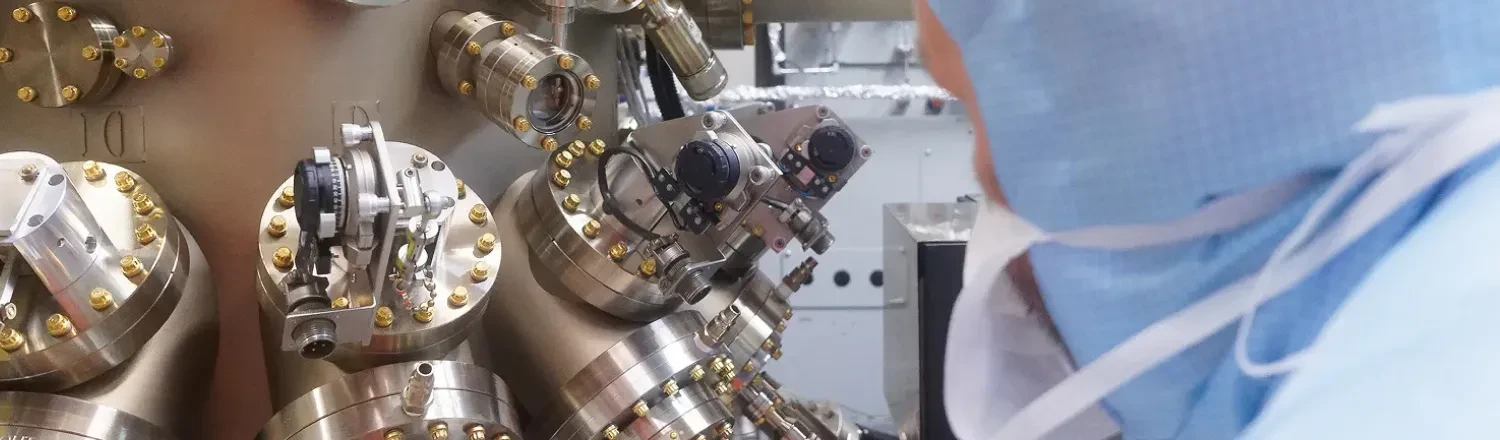
The Institute of High Pressure Physics Polish Academy of Sciences (IHPP PAS) is a leading research center in the fields of physics and materials engineering, dedicated to conducting top-level scientific research with a strong focus on practical applications.
A key research tool used at the Institute is high pressure, applied both to study and modify the properties of matter and to synthesize new materials. The universal role of pressure in physics and technology is reflected in the historical name UNIPRESS, under which the Institute is recognized both nationally and internationally within the scientific community.
The Institute in numbers

1972
Year of establishment of the Institute

250+
Institute staff

100+
Senior researchers

13
Research laboratories
Staff and teaching activities
The Institute of High Pressure Physics Polish Academy of Sciences currently employs approximately 250 people, including:
- 16 professors,
- 18 habilitated doctors,
- around 70 PhD holders.
Research teams are supported by engineers, technologists, and administrative staff.
The Institute is authorized to confer doctoral and postdoctoral (habilitation) degrees in the disciplines of physical sciences and materials engineering. Doctoral training is conducted within the Warsaw Doctoral School in Natural and BioMedical Sciences (Warsaw-4-PhD).
Locations and infrastructure
The Institute of High Pressure Physics Polish Academy of Sciences conducts research activities across five locations:
- 29/37 Sokołowska Street, Warsaw – main headquarters; GaN crystal growth using the HVPE method and ultra-high pressure annealing (UHPA),
- 98 Prymasa Tysiąclecia Avenue, Warsaw – research laboratories, including cleanrooms for semiconductors and biomaterials,
- 19 Poleczki Street, Warsaw (CEZAMAT PW) – terahertz (THz) radiation laboratory,
- Stanisławów Pierwszy – GaN crystal growth using the ammonothermal method and GaN substrate production,
- Lasek, Celestynów municipality – Unipress Innovation Park; hydroextrusion technologies and high-pressure hydrogen storage.
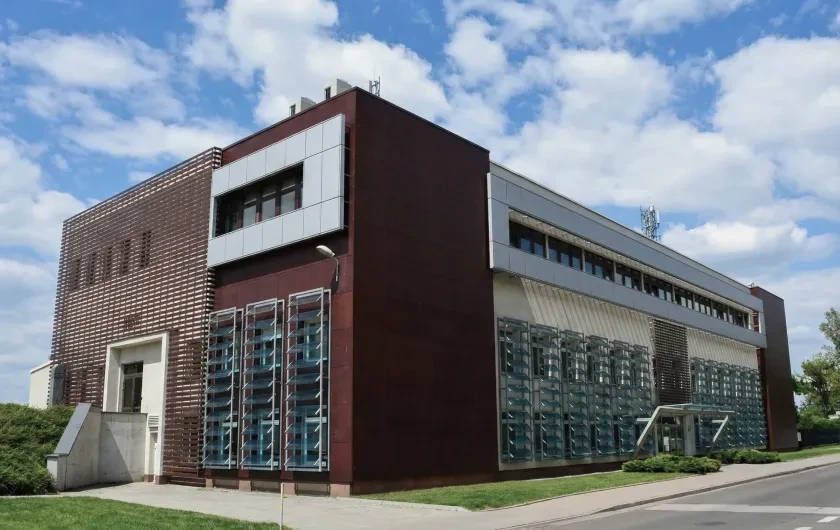
Main building
ul. Sokołowska 29/37
01-142 Warszawa
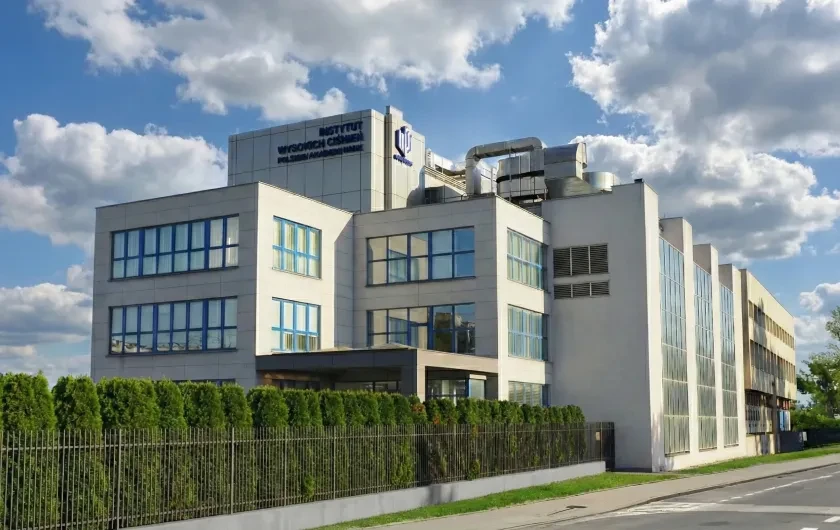
New technologies building
al. Prymasa Tysiąclecia 98
01-424 Warszawa
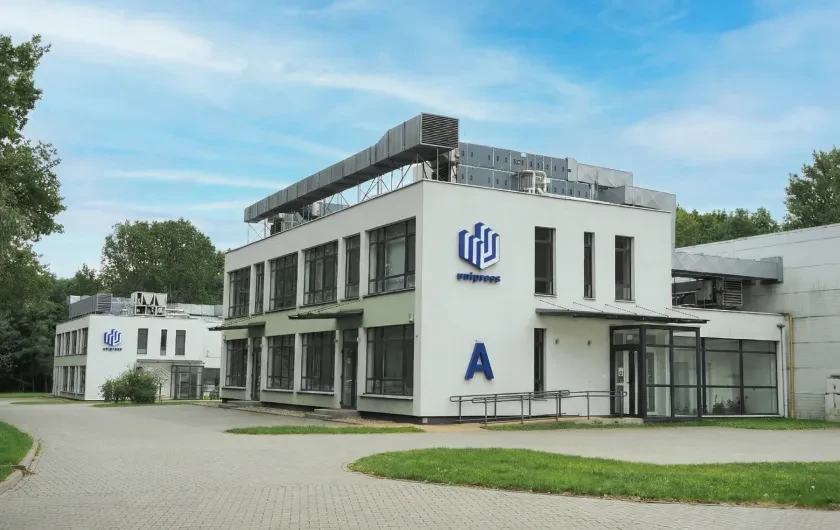
Celestynów Technology Park
Instytutowa 7, Lasek
05-430 Celestynów
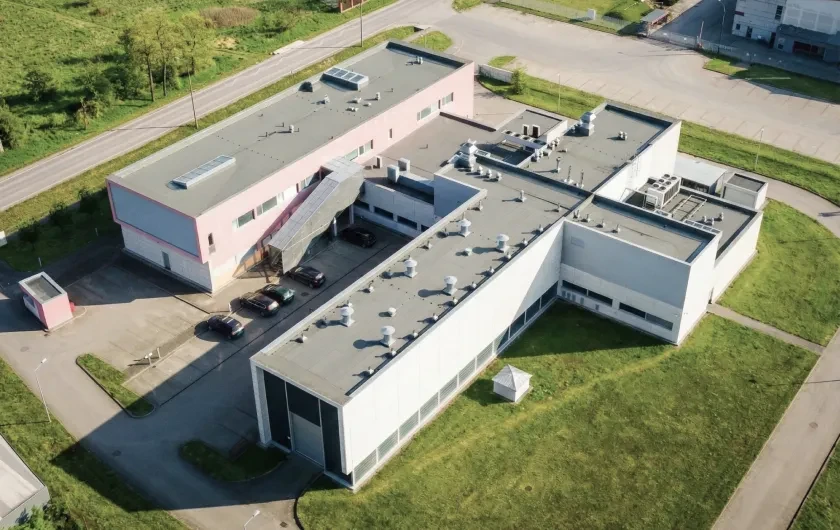
Laboratory of Ammonothermal Synthesis IHPP PAS
ul. Strużańska 8
05-126 Stanisławów Pierwszy
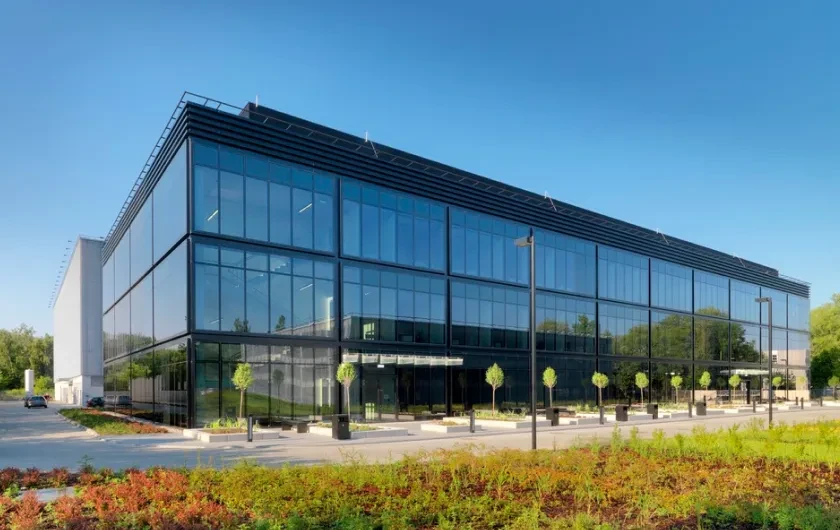
Institute laboratories in CEZAMAT
ul. Poleczki 19
02-822 Warszawa
Scientific specializations
The Institute of High Pressure Physics Polish Academy of Sciences is a leader in research on nitride semiconductors, including:
- GaN crystal growth,
- substrate preparation,
- epitaxy,
- design and fabrication of electronic and optoelectronic devices.
In addition, the Institute conducts research on:
- terahertz (THz) radiation,
- soft matter,
- superconductors,
- nanomaterials for medicine and veterinary applications (including hydroxyapatite),
- advanced metal processing methods,
- high-pressure equipment used in research and industry.
Scientific position and collaboration
The Institute’s research infrastructure has been included in the Polish Roadmap for Research Infrastructures as:
- the “GaN UNIPRESS” Centre for Nitride Semiconductor Physics and Technology,
- X-PressMatter – a research platform for high-pressure food processing and glass technologies.
The Institute holds category "A+" in the discipline of physical sciences and category "A" in the discipline of materials engineering. The high quality of research is confirmed by the presence of eight researchers from IHPP PAS in the TOP 2% of the world’s most frequently cited scientists (Stanford University ranking).
The Institute of High Pressure was established in 1972 by the Polish Academy of Sciences. Its scientific foundations were inspired by the semiconductor physics school of Professor Leonard Sosnowski, who emphasized that “pressure opens a range of interesting possibilities for studying semiconductor materials.”
Initially, the research group led by Professor Sylwester Porowski operated within the Institute of Physics of the Polish Academy of Sciences as an independent Experimental Unit “UNIPRESS” (1972–1976). A key milestone in its development was obtaining its headquarters at 29/37 Sokołowska Street in Warsaw, which enabled further expansion of infrastructure and research activities.
In the following years, the unit underwent several organizational changes:
1976–1982 – High Pressure Research and Development Centre “UNIPRESS” PAS
1982–1992 – High Pressure Department of PAS
1992–2004 – High Pressure Research Centre of PAS
Since 2004, the Institute has operated under its current name: the Institute of High Pressure of the Polish Academy of Sciences.
![Entrance to the Institute’s headquarters at 29/37 Sokołowska Street in Warsaw in the 1970s [archival materials of IHPP PAS]](/files/instytut/2026/04/1775732536_about-old-1.webp)
![Entrance to the Institute’s headquarters at 29/37 Sokołowska Street in Warsaw [photo: Mikołaj Żak]](/files/galeria/2026/04/100018.webp)
Founder and leadership
The Institute of High Pressure of the Polish Academy of Sciences is inseparably associated with Professor Sylwester Porowski – its founder and first director. Professor Porowski laid the foundations for the Institute’s scientific development and initiated pioneering high-pressure research, including studies on:
- the band structure of narrow-gap semiconductors such as HgTe and InSb,
- the thermodynamics and crystallization of gallium nitride (GaN).
These studies paved the way for the Institute’s dynamic growth and international recognition.
The Institute has been led by:
- Prof. Sylwester Porowski – Director (1972–2010),
- Prof. Izabella Grzegory – Director (2011–2022),
- Prof. Michał Boćkowski – Director (since 2023).



Institute history – timeline
-
1972
Establishment of the Institute of High Pressure of the Polish Academy of Sciences as the “UNIPRESS” Experimental Unit within the Institute of Physics PAS. Head: Prof. Sylwester Porowski.
-
1976
Relocation to Sokołowska Street in Warsaw and obtaining the status of an independent unit: High Pressure Research and Development Centre “UNIPRESS” PAS.
-
1982
Transformation into the High Pressure Department of PAS. Intensive development of high-pressure equipment and GaN research.
-
1992
Creation of the High Pressure Research Centre PAS. Strengthening of international position in semiconductor physics.
-
2004
Adoption of the current name: Institute of High Pressure of the Polish Academy of Sciences.
-
2010
Conclusion of the directorship of Prof. Sylwester Porowski – founder and architect of the Institute’s development.
-
2011–2022
Directorship of Prof. Izabella Grzegory. Development of GaN technologies, cleanroom infrastructure, and international collaboration.
-
2023
Appointment of Prof. Michał Boćkowski as Director. A new phase of development focused on power electronics, quantum technologies, and industrial applications.