-
Popularisation of science
- ⋅
- 14/04/2026
- ⋅
- Reading time approx. 2 min
Ekstremalny kryształ – jak azotek galu zmienia współczesną technologię
The article presents the importance of gallium nitride (GaN), one of the key materials in modern electronics and optoelectronics. It enabled the development of blue LEDs and lasers, which revolutionised technologies such as data storage (Blu-ray), displays, and lighting systems .
Although the properties of GaN had been theoretically predicted long ago, producing high-quality crystals remained a major challenge for years. A breakthrough came in the 1980s, later recognised with the Nobel Prize in Physics, thanks to advances in reducing defects and enabling efficient p–n junction formation.
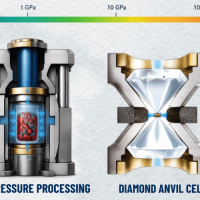
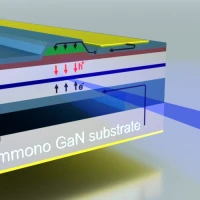
A significant contribution to this field was made by Polish researchers from the Institute of High Pressure Physics PAS, who developed methods for growing GaN crystals under extreme pressure and temperature conditions. This led to the production of nearly defect-free materials and enabled the construction of high-performance semiconductor lasers .
In parallel, the ammonothermal method was developed, offering a scalable route to high-quality crystal production. Through close collaboration between research institutions and industry (including companies such as TopGaN and Ammono), Poland has become an important centre for nitride technology development.
The article demonstrates how fundamental research conducted under extreme conditions translates into real-world applications—from consumer electronics to advanced laser systems—and highlights the strong international position of Polish research teams in this field.
Downloads
 Full article text
 Latest