-
Science and research
- ⋅
- 22/09/2026
- ⋅
- Reading time approx. 2 min
Nowa publikacja: krytyczny i szklisty dualizm w ciekłych kryształach z nanocząstkami C₆₀
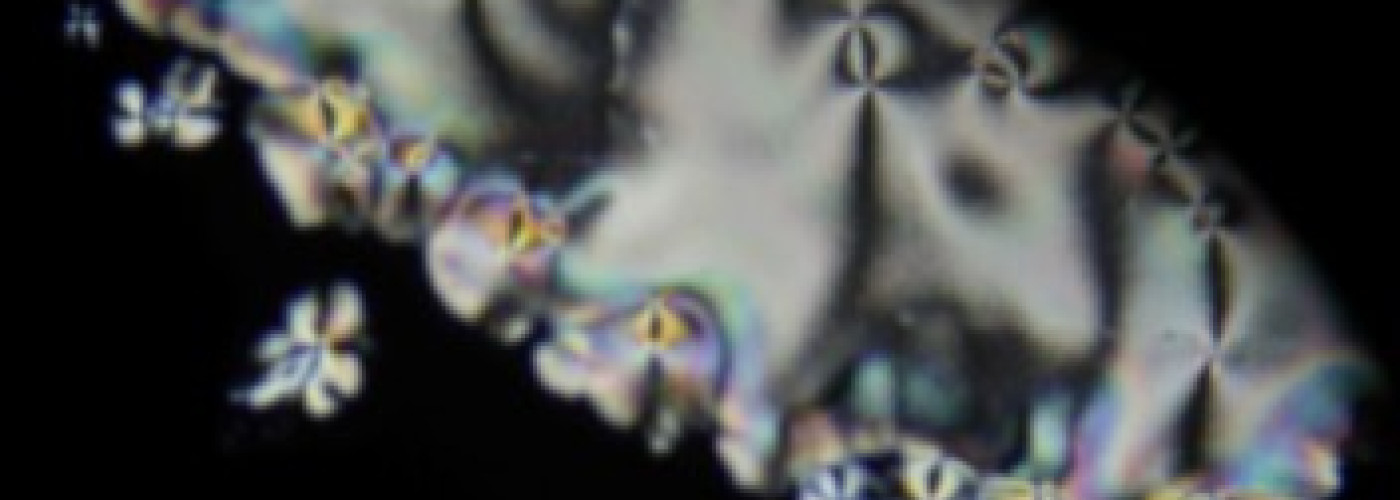
A team of scientists from our Institute has recently published a paper by A. Drozd-Rzoska, M. Kotowski, J. Kalabinski, T. Rajvanshi, and S.J. Rzoska entitled Critical and glassy dualism in glass-forming E7 nematogenic mixture and fullerene C60 nanocolloids, Nanomaterials 2026, 16, 1123; DOI: 10.3390/nano16171123 (IF = 4.8, 100 MNiSW points).
The publication addresses one of the important challenges in modern physics - understanding the mechanism of the transition of matter into the glassy state. The experimental results provide strong evidence for the occurrence of features characteristic of continuous phase transitions, supporting the hypothesis that the glass transition has a critical character unrelated to the conventional mechanism of symmetry breaking. A particular role is played by the structural frustration induced by the small addition of C₆₀ fullerene nanoparticles. Based on the results obtained, the authors propose preliminary assumptions for a new model describing the transition to the glassy state, with the key idea captured by the concept of “dualism.”
The study also revealed an effect with potential application significance. An addition of only about 0.1% C₆₀ can permanently align the liquid-crystal molecules in a parallel orientation, resulting in a significant increase in dielectric permittivity over a broad temperature range around room temperature. This effect may be relevant, among other applications, to the development of new optoelectronic devices and energy-storage materials.
The image shows a polarizing optical microscopy image of a liquid-crystal + 1% C₆₀ nanocolloid (P = 100 MPa) at the phase transition boundary between the nematic and isotropic phases.
Latest