-
Other
- ⋅
- 16/09/2026
- ⋅
- Reading time approx. 4 min
Prof. Michał Boćkowski w podcaście PAN „Człowiek 2.0 - Polska odpowiedź na wyścig półprzewodników”
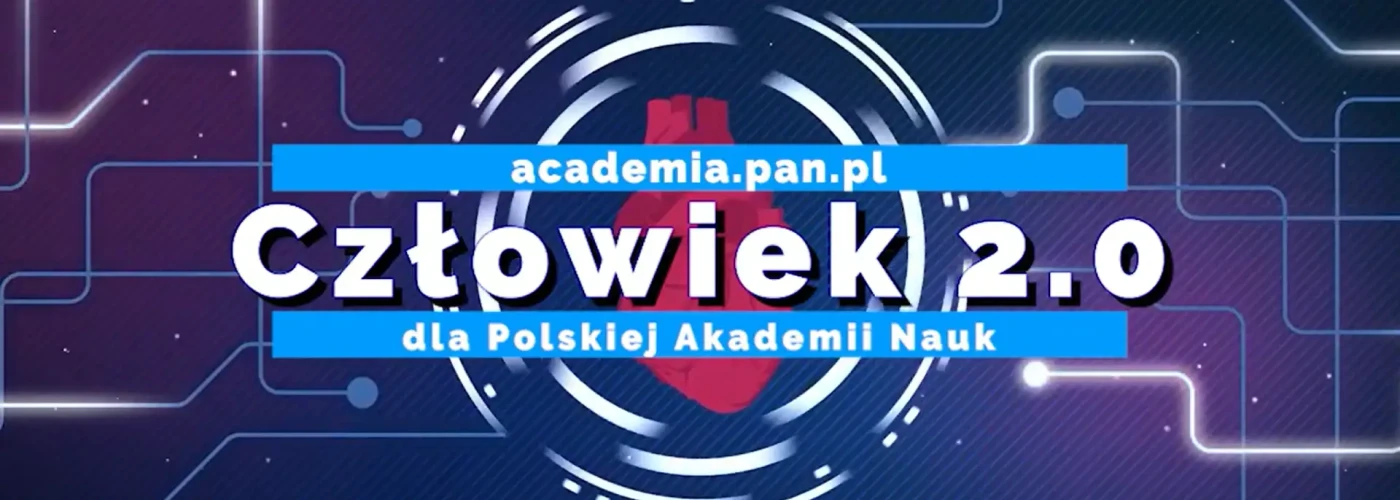
“Człowiek 2.0” is a science and technology podcast from the Polish Academy of Sciences, in which journalist Jan Stradowski talks with scientists about how discoveries and technologies are changing our world. The podcast is broadcast in Polish.
Today, we can listen to a conversation with the director of the Institute of High Pressures of the Polish Academy of Sciences (UNIPRESS), Prof. Michał Boćkowski, who explains what semiconductor materials are, reveals the behind-the-scenes story of the crystallization and research of gallium nitride (GaN) in Poland, and presents the scientific prospects and commercialization plans for the technologies being developed at the Institute.
Link to the podcast on YouTube: Człowiek 2.0 - Polish response to the semiconductors race
Pioneers and History: Polish research on gallium nitride began in 1984 with the determination of the material’s equilibrium curve under pressure by Prof. Sylwester Porowski - the first director of the High Pressure Department of the Polish Academy of Sciences, later transformed into the Institute of High Pressure Physics. This equlibrium curve was described in a joint publication with Janusz Karpiński and Jan Jun. The next key achievement was the crystallization of high-quality GaN single crystals by Prof. Izabella Grzegory, now a corresponding member of the Polish Academy of Sciences. Building on this foundation, Prof. Sylwester Porowski’s team began work on the Polish blue laser, developing not only methods for GaN crystallization but also thin-film epitaxy techniques and device processing. The 1990s and 2000s were not easy; global competition was about six years ahead of us, but in hindsight, it is clear that we achieved tremendous success, establishing UNIPRESS as a brand in science and securing a unique position in technology as well, which is quite unusual on a global scale.
With a very strong scientific foundation and experience in nitride technologies, following the collapse of Ammono S.A., the Institute of High Pressure Physics manager, thanks to a loan from the Industrial Development Agency (ARP) aquired by prof. Izabella Grzegory, former IHPP PAS director, to save and revitalize another GaN crystallization technology that had been developed in parallel in Poland.
Research Potential and Team: Currently, the Institute of High Pressure Physics (also known as UNIPRESS) is the world’s largest academic team working on nitrides (approximately 110 researchers) and holds the highest scientific category, A+, in the field of physics. It attracts young researchers and doctoral students from renowned international institutions, such as Cornell University (USA) and Nagoya University (Japan). It collaborates closely with, among others, the team of Nobel laureate Prof. Hiroshi Amano.
Commercialization is in the Institute’s DNA. Unipress bridges science and business by building pilot production lines, which enable the manufacture and sale of GaN substrates and epitaxial structures, revenue needed to repay the loan from the Industrial Development Agency (ARP). Investments in equipment are supported, among other sources, by KPO funds and European projects (including the WBG Pilot Line), as well as the national GaN-Unipress Center (FNP), with a time horizon set for 2030.
Currently, the Institute produces 2-inch GaN substrates of the highest quality in the world, is developing 4-inch substrate technology, and is building additional autoclaves for even larger diameters (8 inches). By focusing on advanced GaN-on-GaN technology, it competes with global industry giants (e.g., Mitsubishi Chemical, Kyocera, etc.).
Future applications: While LEDs manufactured on sapphire are already a mature technology, UNIPRESS is focusing on the development of substrates and structures for high-power and high-frequency electronics, lasers, and quantum devices 2.0. Over the next decade, GaN is expected to be used, among other things, to create reproducible single-photon emitters for secure data encryption, as well as AI solutions thanks to power electronics that are more efficient than silicon.
When it comes to the Institute’s work philosophy, we can say that when we identify an important problem, we want to solve it in the best possible way. Above all, we hope for groundbreaking scientific ideas: “new thinking.”
The podcast Człowiek 2.0 - Polish response to the semiconductors race is avaialable on YouTube.