-
Science and research
- ⋅
- 04/03/2026
- ⋅
- Reading time approx. 2 min
Projekt SONATA bis na tandemowe ogniwa InGaN-perowskit
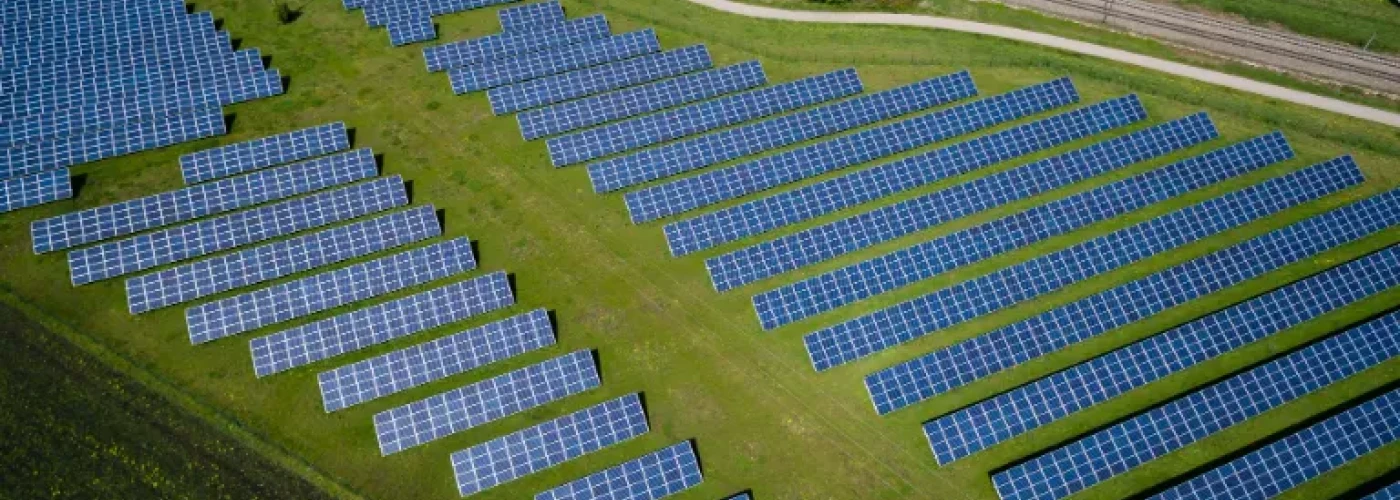
We are pleased to announce that the National Science Centre (NCN) has awarded funding for research on InGaN–perovskite tandem solar cells to Prof. Julita Smalc-Koziorowska (DSc, Eng.) from the Institute of High Pressure Physics PAS.
The research will be carried out במסגרת the SONATA BIS project entitled “Design and optimisation of nitride and nitride–perovskite tandem solar cells,” in collaboration between the Institute of High Pressure Physics PAS and the Institute of Physical Chemistry PAS. The project is led by Prof. Julita Smalc-Koziorowska at IHPP PAS, with Prof. Daniel Prochowicz leading the research group at the Institute of Physical Chemistry PAS.
The project addresses the growing demand for clean energy and the need to develop photovoltaic technologies with higher efficiency than conventional silicon-based cells. One of the most promising approaches is tandem solar cells, which combine materials with different bandgaps to more efficiently utilise the solar spectrum.
The SONATA BIS project will focus on combining two particularly promising materials:
- InGaN – a semiconductor with a tunable bandgap, high stability, and strong light absorption,
- Halide perovskites – materials with excellent optoelectronic properties, already achieving over 25% energy conversion efficiency.
Main objectives of the project:
- development and optimisation of high-indium-content InGaN pseudosubstrates,
- fabrication and testing of InGaN-based solar cells,
- demonstration of InGaN–perovskite tandem solar cells capable of surpassing the limitations of conventional PV architectures.
The project addresses key material challenges, such as crystal defects and limitations in InGaN layer growth, and has the potential to make a significant contribution to the development of photovoltaics and III–V optoelectronics. Its goal is not only to improve solar cell efficiency but also to expand fundamental knowledge of nitride semiconductors and hybrid photovoltaic structures.
Latest